

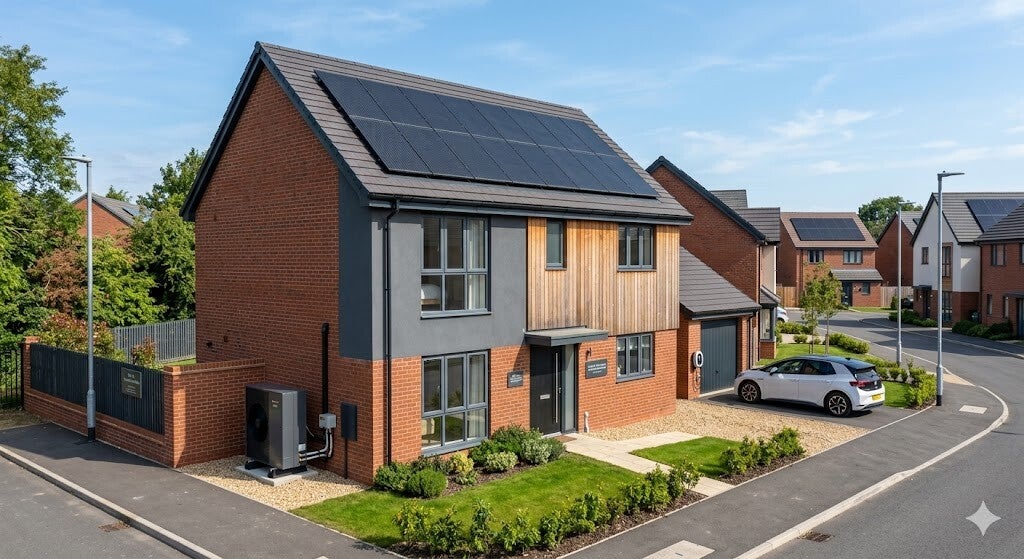
Designing Beyond the Blueprint: Navigating the Future Homes Standard
The architectural community has reached a critical regulatory milestone. Following the official publication of the Building Regulations (Amendment) (England) Regulations 2026, the blueprint for residential design has changed. For practices balancing new builds and ambitious extensions, these updated frameworks alter how we approach fabric, glazing, and services.
The headline directive is a mandatory 75% to 80% reduction in carbon emissions compared to previous baselines. In practice, this signals the end of fossil-fuel heating in new developments, establishing low-carbon air or ground-source heat pumps as the standard. Crucially, the regulations introduce a new functional requirement: Requirement L3, which mandates on-site renewable electricity generation—typically satisfied by integrating photovoltaic (solar) panels proportional to the building's footprint.
The real architectural challenge lies in balancing extreme fabric efficiency with liveability. Tighter thermal target values require highly airtight envelopes, placing a heavier design burden on ventilation and overheating compliance. For residential extensions—traditionally dominated by expansive, floor-to-ceiling glass boxes—physics doesn't negotiate. To pass tighter "Notional Extension" targets without sacrificing natural light, we must embrace advanced triple-glazing technologies, calculate solar gain precisely, and integrate structural shading strategies early in the concept stage.
Rather than viewing these updates as restrictive red tape, our practice sees them as a framework for superior build quality. By designing with micro-precision—from thermal bridge detailing to mechanical ventilation paths—we can deliver light-filled, forward-thinking homes that are entirely decoupled from the gas grid.
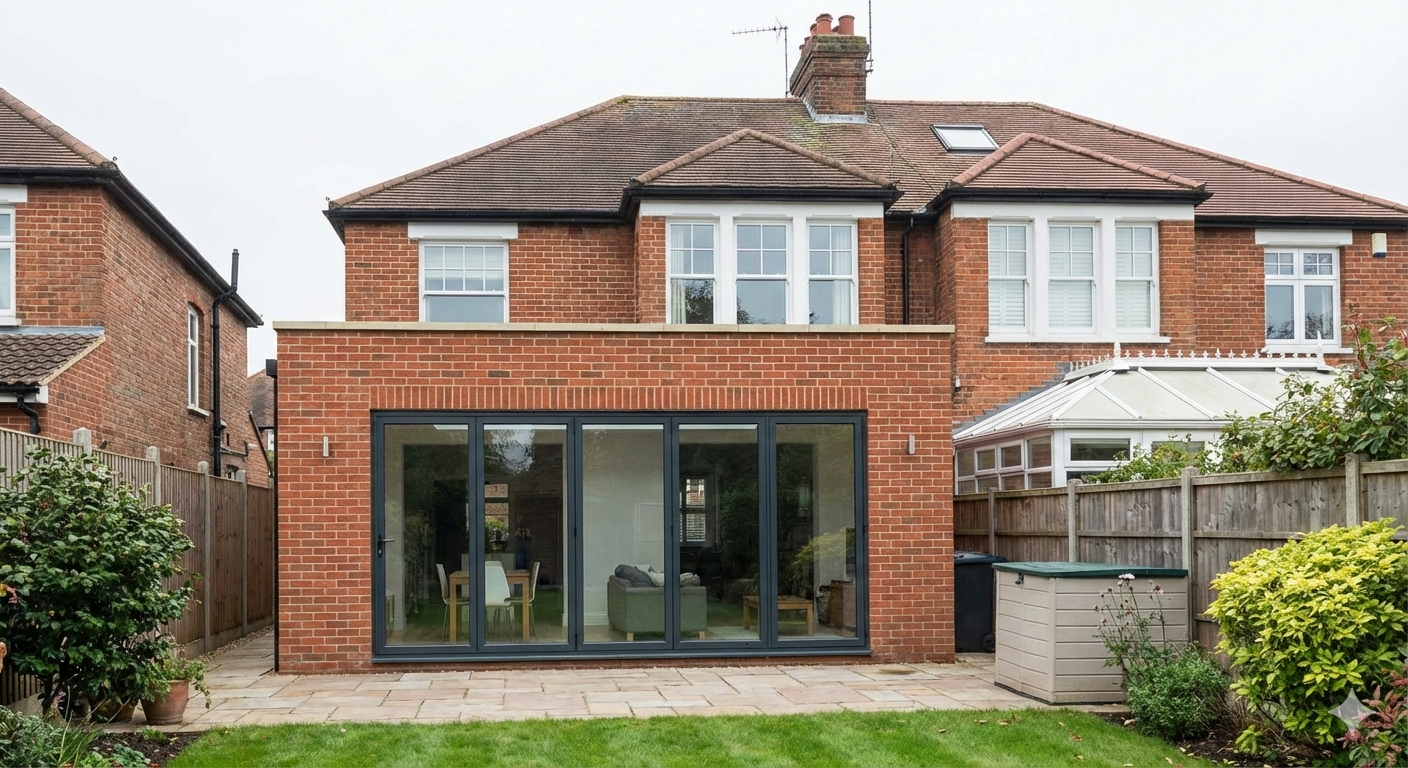
The Complexities of Building an Extension in the UK
Expanding your home in the UK is an exciting prospect, but navigating the bureaucratic and physical complexities requires careful planning. Building an extension is rarely as simple as laying bricks and mortar; it is a complex web of legal, administrative, and structural hurdles.
The first major obstacle is the planning phase. While some minor projects fall under Permitted Development Rights, larger builds require full planning permission. Navigating local council guidelines, especially if your property is in a Conservation Area or is a Listed Building, can be painstaking. Furthermore, the Party Wall etc. Act 1996 mandates formal agreements with neighbours if you are building close to shared boundaries. This legal requirement can cause significant delays if disputes arise.
Beyond planning, strict adherence to UK Building Regulations is non-negotiable. These govern structural integrity, fire safety, ventilation, and increasingly stringent energy efficiency standards. Physically, the UK's diverse soil types—such as London clay—often demand specialized, costly foundation work. Rerouting existing utilities, like hidden drainage pipes, adds another layer of technical difficulty. Add in the notorious British weather and fluctuating material costs, and budgets can quickly spiral.
Ultimately, a successful UK extension demands a robust contingency fund and a team of seasoned professionals (like Tudu Ltd) to navigate these inevitable complexities.
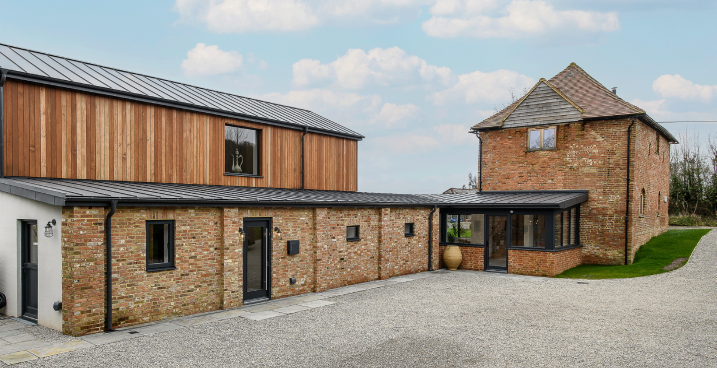
The Expert Orchestra: Why Building a House Requires So Many Consultants
Building your own home is a dream project, but the reality often feels less like a solitary endeavor and more like managing a crowded committee. Many first-time builders are baffled by the sheer number of specialized consultants required before ground is even broken. Why is this army of experts necessary?
The simple answer is that modern house building has become profoundly complex. Gone are the days when a builder just "figured it out" on site. Today’s homes must meet rigorous national standards for structural integrity, fire safety, and increasingly stringent energy efficiency targets.
No single professional possesses deep expertise in every one of these areas. It is a game of necessary specialization. While an architectural designer crafts the vision, spatial flow, and aesthetics, they rely heavily on a structural engineer to calculate the beams and foundations that ensure the building stands up. Simultaneously, an energy assessor is crucial to navigate sustainability regulations (like Part L in the UK), ensuring the house is efficient to run.
Furthermore, consultants act as essential risk managers. A quantity surveyor keeps the budget from spiralling, while a planning consultant navigates the often-bureaucratic maze of local authority permissions.
While paying these fees can feel burdensome initially, this "orchestra" of experts is vital. They ensure your major investment is legal, safe, within budget, and actually habitable. Trying to build a modern home without them isn't cost-saving; it's gambling.
The process of a new build
Building a new home in the UK is a multi-stage process, meticulously regulated to ensure safety, quality, and environmental performance. It typically begins long before the first spade hits the ground, with a critical design and planning phase.
This initial stage involves securing a suitable plot and engaging professionals like architects and structural engineers to draft detailed plans. These plans must then be submitted to the local authority for planning permission, a rigorous assessment against local development policies, design guides, and neighbour consultations. Simultaneously, detailed drawings are prepared to satisfy Building Regulations approval, which governs structural integrity, fire safety, drainage, ventilation, and energy efficiency.
Once approvals are in place, the groundworks commence. This includes site clearance, excavation for foundations, and laying the initial drainage and utility connections. The choice of foundation type will depend heavily on ground conditions. Next comes the substructure, typically concrete foundations and a damp-proof course, followed by the superstructure: the walls (often brick and block cavity construction), floors, and roof structure.
As the building becomes watertight, the first fix internal works begin – installing wiring, plumbing pipes, and internal stud walls. This is followed by insulation and plasterboarding. The second fix sees the installation of sanitary ware, kitchen units, internal doors, architraves, and skirting boards. Finally, decoration and landscaping complete the project. Throughout the build, independent Building Control inspectors will visit at key stages to ensure compliance with regulations, culminating in a completion certificate.